
Scott County District Court Clerk
Scott County court records are handled by the Clerk of the District Court at Scott County District Court. The 25th Judicial District lists Sandra Acosta as Clerk of the District Court with phone (620) 260-2552. The county page lists Sandra Acosta at Sandra.acosta@kscourts.org and Deputy Clerk Deena Sharpe at Deena.sharpe@kscourts.org, while the judicial district page lists Deena Ballard as deputy clerk. The office is the records counter for district court civil, criminal, probate, divorce, juvenile, guardianship, protection, and related files.
The court clerk is not the Scott County Clerk. County administrative records, elections, commission records, budgets, tax statements, trash billing, accounts payable, payroll, and wildlife or parks permits are handled by the county clerk. Land records are handled by the register of deeds. City records are requested from Scott City under the city open-records process.
That office split is practical, not just formal. A divorce decree, probate order, criminal disposition, civil judgment, or guardianship filing belongs with the District Court Clerk. A commission minute, election record, county budget item, or trash billing issue belongs with the Scott County Clerk. A deed, mortgage, land transfer, or genealogy lead from real estate records belongs with the Register of Deeds.
Clerk of the District Court
Clerk: Sandra Acosta
303 Court Street, 2nd Floor
Scott City, KS 67871
(620) 260-2552
Sandra.acosta@kscourts.org
Monday-Friday, 8 a.m.-noon and 1 p.m.-5 p.m.
Scott County Clerk Duties
The Clerk of the District Court receives filings, maintains the official case record, supports public access to allowed records, handles information requests, and processes copy or certification requests. Local policy says documents for judges should be hand-delivered to or mailed to the clerk's office. Pleadings brought to the counter after 4 p.m. may not be processed until the next business day.
The Scott County Clerk page is the source for the separate county administrative clerk office.
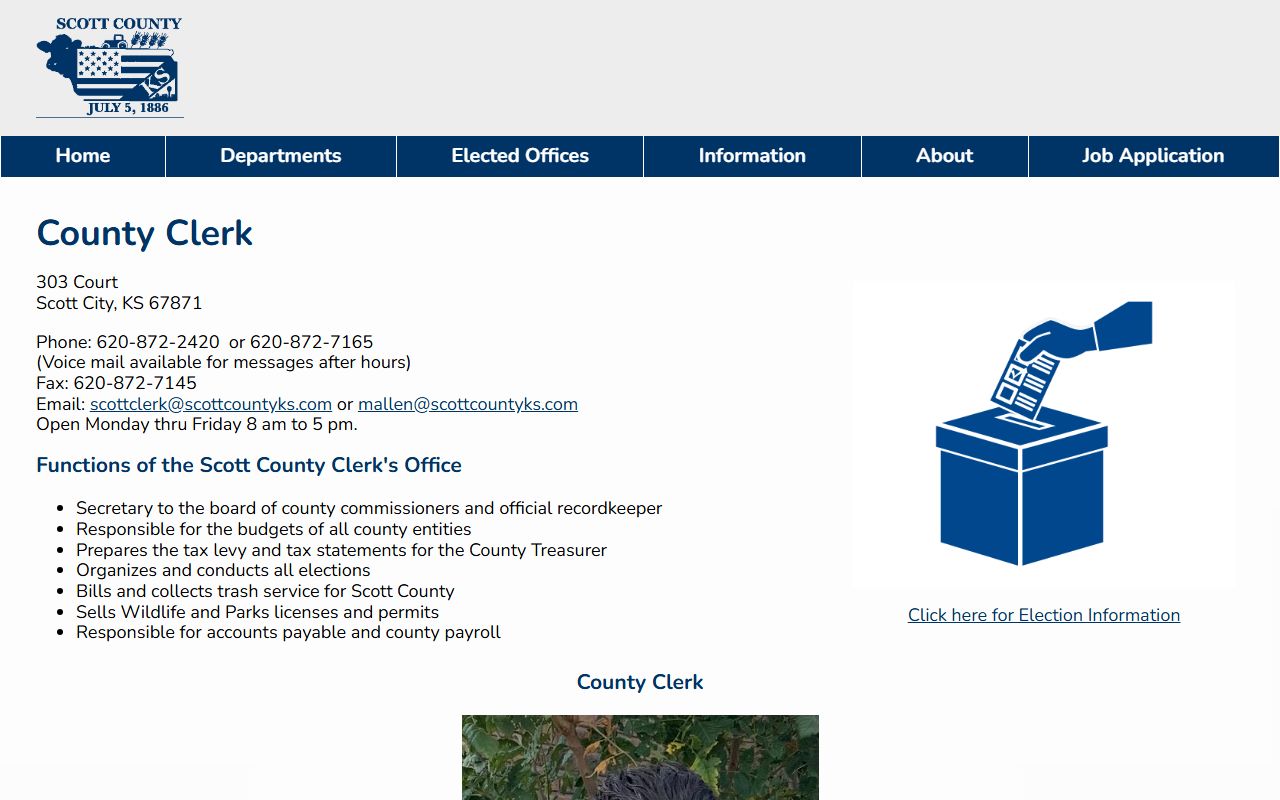
That distinction helps prevent court-record requests from being sent to the wrong clerk-like office.
- Maintain Scott County District Court case records and docket information.
- Provide public access computers in the clerk's office for public record searches.
- Receive information requests by telephone, in person, in writing, or by fax.
- Copy and certify eligible court records when fees and access rules are met.
- Route filings and documents to the proper court process under local policy.
Request a Certified Copy
A certified copy is used when a plain printout is not enough. Divorce decrees, probate orders, criminal dispositions, judgments, and other formal court documents may need certification for legal, licensing, benefit, title, or agency use. The clerk can certify eligible records that are public or available to the requesting party.
- Identify the case number if known. If not, search Kansas CaseSearch or use the courthouse public access computer.
- Write down the party names, case type, filing year, and exact document needed, such as journal entry, decree, order, or judgment.
- Contact the Clerk of the District Court by phone, in person, in writing, or by fax to confirm access and cost.
- Pay the copy or certification fee required by the clerk and provide mailing instructions if the record is not picked up.
- Allow the local three-business-day response window for information requests unless staff gives a different timeline.
Records Request Fields
Scott County District Court research did not locate a separate court-record PDF form, but the local policy allows telephone, in-person, written, and fax requests. A written request should be specific enough for the clerk to identify the record and calculate fees. For city records, the Scott City open-records form uses more formal fields under KORA.
| Field | Required | Notes |
|---|---|---|
| Case Number | No, but best | Use the exact Scott County District Court number if known. |
| Party Names | Yes | List plaintiff/defendant, state/defendant, petitioner/respondent, estate, or other parties. |
| Document Type | Yes | Name the order, journal entry, decree, judgment, probate letter, or other document. |
| Case Type / Year | Helpful | Civil, criminal, probate, domestic, juvenile, traffic, protection, or small claims. |
| Number of Copies | Yes | State plain copies and certified copies separately. |
| Delivery Method | Yes | Pick up, mail, fax, or another method the office approves. |
Scott County Clerk Fees
The District Court Clerk policy lists local copy and certification costs. Other agencies can charge different fees. City open-records fees may include actual staff time and incidentals, and state products such as KDHE certificates or KBI history searches have their own published prices.
| Item | Amount |
|---|---|
| District Court Clerk copy fee | $0.25 |
| Additional certified copy | $1 |
| Attorney of record certified copy | One certified copy at no charge |
| Information request response | Three business days |
| City open-records fees | Actual staff time and incidentals may apply |
Other Scott County Clerks
Several Scott County offices sound similar. The Scott County Register of Deeds keeps land and real estate records, while the genealogy page notes that deeds can show maiden names, heirs, relationships, locations, and marital status. The Scott County Clerk handles county records and elections. The Scott City Clerk or Freedom of Information Officer handles city open-records requests.
The Register of Deeds page is the source for land-record office details.
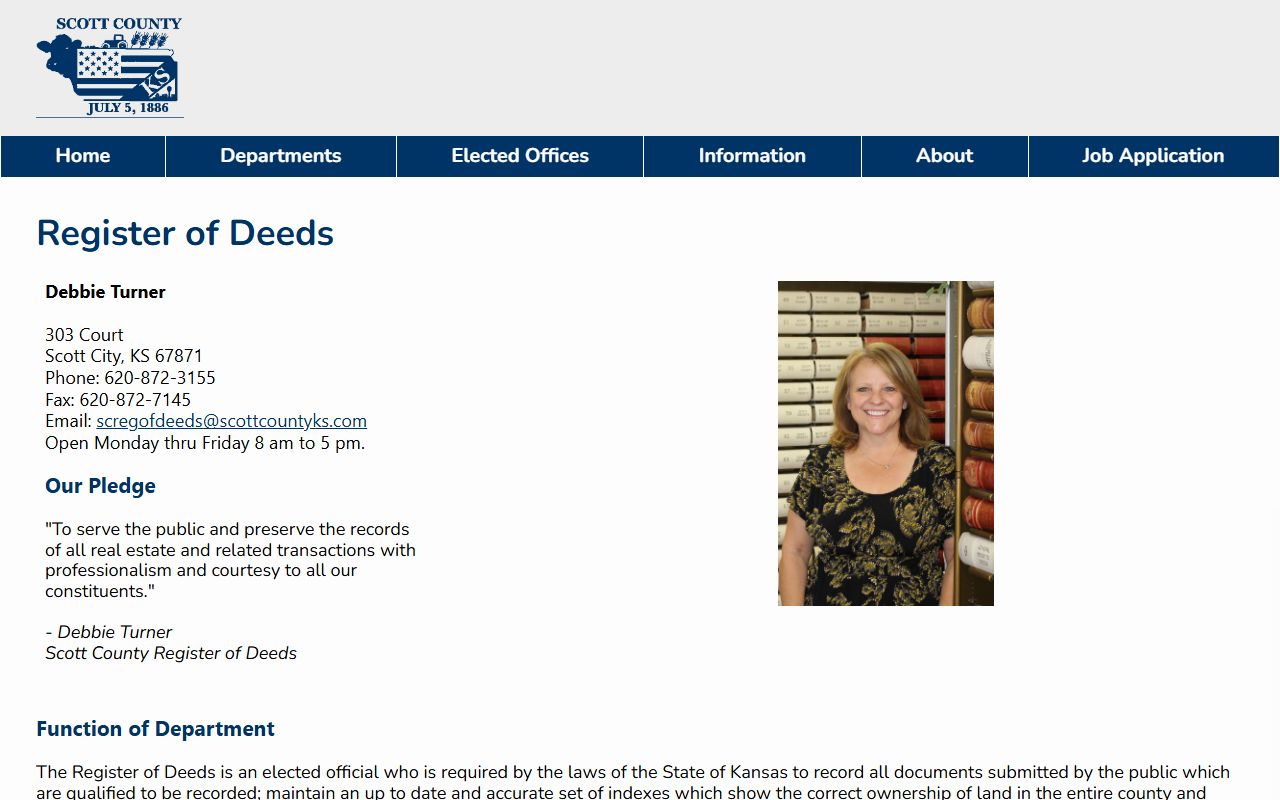
Land records and court records often intersect in judgment or probate research, but they are kept by different offices.
The Register of Deeds genealogy page is the source for deed-based family-history details.
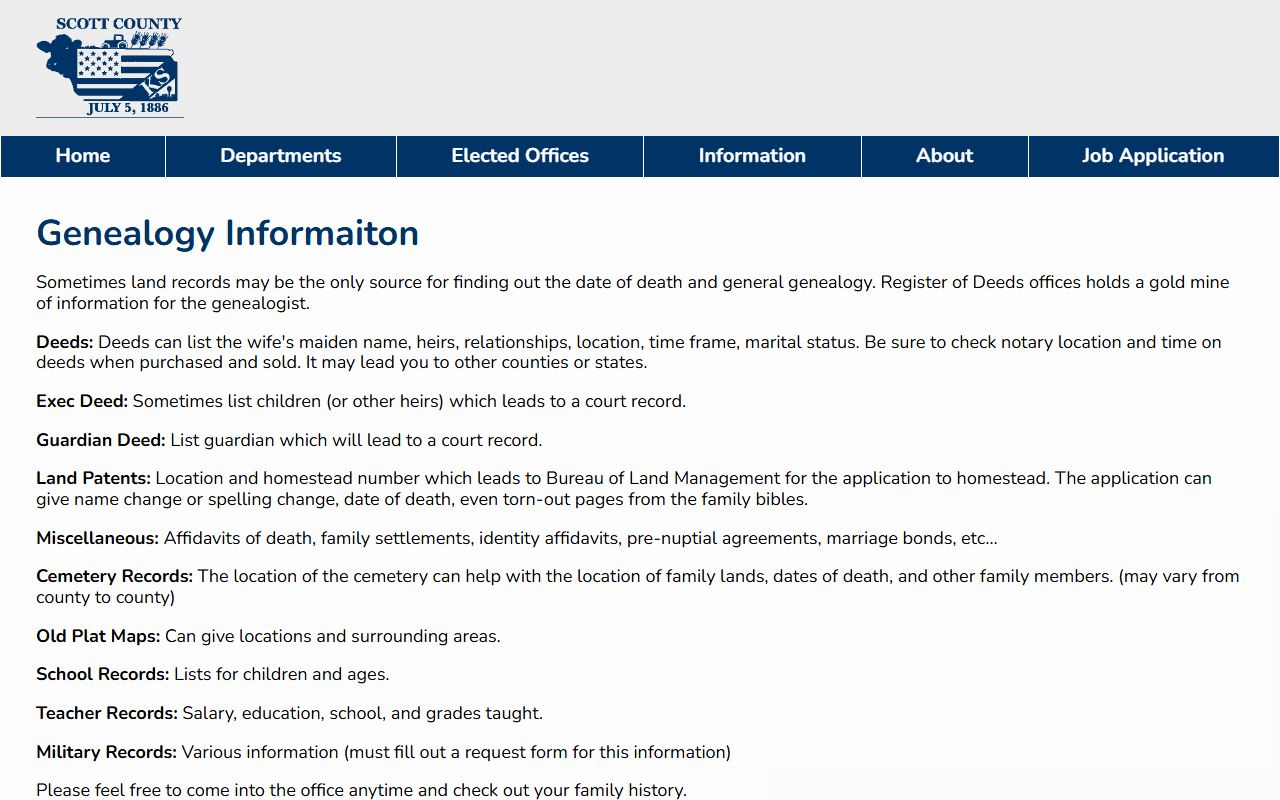
Those genealogy notes are useful when a probate or estate search points toward older property records.
- Scott County District Court Clerk policies - court records, copies, public computers, and request rules.
- Scott City open records request - city records and KORA request process.
- Scott City request form - city public-record request fields and delivery options.
KORA Procedures and Limits
Scott County court records access is shaped by both court rules and the Kansas Open Records Act. K.S.A. 45-220 covers procedures for obtaining records, including custodian duties and office-hour inspection procedures. The Scott City form also requires a certification tied to K.S.A. 45-230, which bars certain commercial use of names and addresses obtained from public records.
KORA also allows a records custodian to respond with more than a copy. The office may ask for clarification, estimate fees, provide a timeline, produce redacted records, or deny access with a legal reason. Court files can have added limits for juvenile matters, adoption, mental health, protected addresses, sealed cases, and personal identifiers.
K.S.A. 45-220 is the source for public-record access procedures.
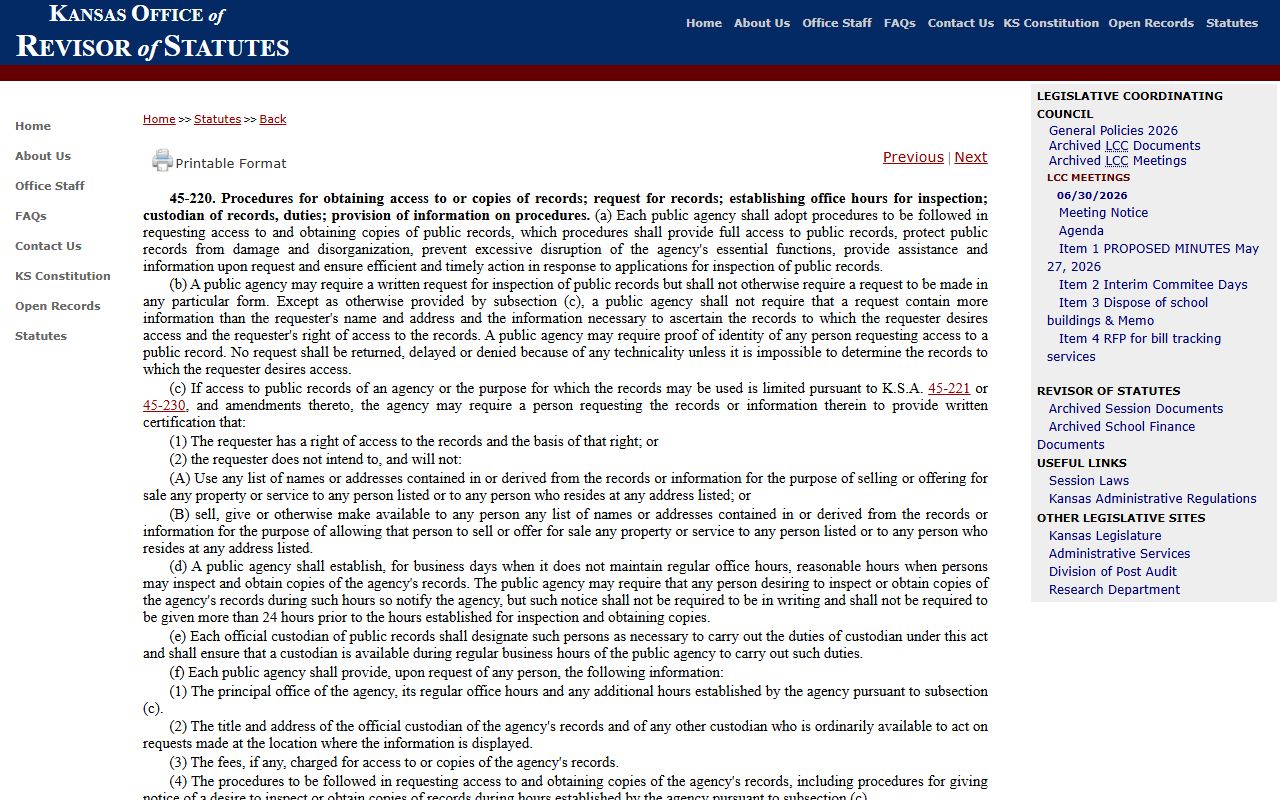
Procedure rules help explain why a records office may ask for a clearer description, fees, or more time.
| City Form Field | Purpose | Notes |
|---|---|---|
| Requester's Name | Identifies the requester | City form includes phone, email, and mailing address fields. |
| Records Sought | Describes the requested record | Use dates, titles, departments, and specific record descriptions. |
| Signature and Date | Certifies the request | Includes commercial-use certification under K.S.A. 45-230. |
| Delivery Method | Shows how records should be provided | Options include in person, mailed, faxed, or emailed. |
| Total Charges | Office use | An itemized invoice may be attached. |