
Scott County Arrest Records and Court Charges
Scott County arrest records begin with law enforcement. The Scott County Law Enforcement Center is the official local source for sheriff, jail, dispatch, arrest report, offense report, accident report, background check, MVR, and VIN inspection services. The building is at 602 West 5th Street, Scott City, Kansas 67871, and the main phone is 620-872-2133. Sheriff Jeffrey Pounds is listed as sheriff, and the page identifies dispatchers as the contact for accident, offense, and arrest reports.
Court charges after arrest begin when a prosecutor, citation authority, or court filing turns the event into a case. For Scott County District Court cases, the formal record may appear through Kansas CaseSearch, courthouse public computers, or the Clerk of the District Court. For Scott City municipal citations and ordinance cases, the Scott City Municipal Court at 303 Court St. is a separate channel. The municipal court phone is 620-872-5822, and court is held at 4 p.m. one Thursday each month as set by the municipal judge.
The key distinction is simple: an arrest record can show that a person was arrested or booked, but a court charge record shows the accusation filed in court. A charge can later be amended, reduced, dismissed, or resolved by plea or trial. The full case outcome is part of Scott County criminal court records, while custody status and jail questions belong with Scott County inmate records.
Find Scott Arrest Records and Charges
Use more than one channel because Scott County does not publish one combined arrest-to-charge database. For court charges filed in district court, start with Kansas CaseSearch. Search by case number if known, or by defendant name, business name, citation, or other criteria available to the public role. If online results are incomplete, the Scott County District Court Clerk office has public access computers and a sign-in sheet for public records searching.
- For current arrest or custody questions, call the Law Enforcement Center at 620-872-2133.
- For filed district court charges, search Kansas CaseSearch by name, case number, or citation.
- For city ordinance or municipal traffic charges, call Scott City Municipal Court at 620-872-5822.
- For copies or certification, request records from the Clerk of the District Court by phone, in person, writing, or fax.
- For statewide background data, use KBI criminal history only as a separate state-level record check.
The Law Enforcement Center is also the practical starting point for arrest reports. Its official page says county and city offices share the building with a dispatch area, a jail facility for 24 inmates, and records services. Crime tips go to Sheriff Jeffrey Pounds at the same main number. The Scott County Attorney contact page also directs people wishing to report a crime or seeking incarceration information to the Law Enforcement Center.
The KBI registered offender registry is one statewide source related to public criminal-record research.
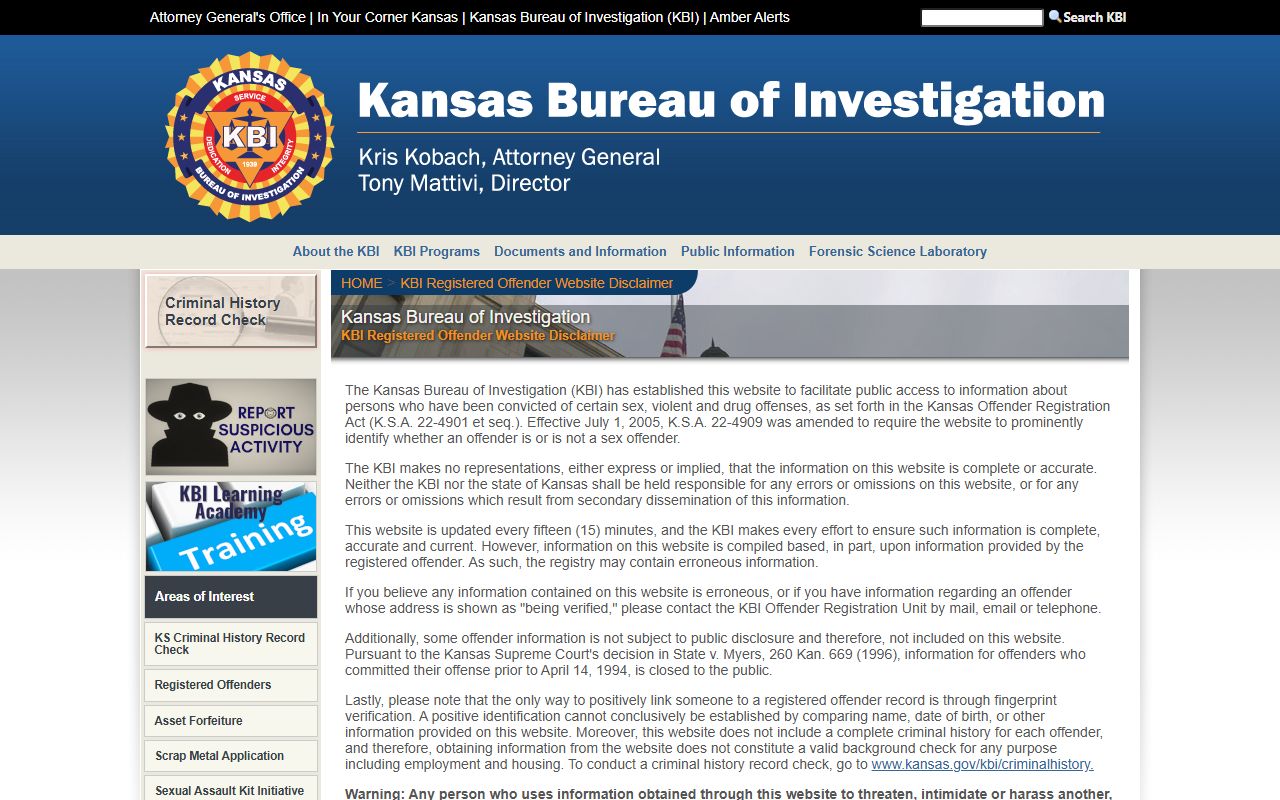
The registry is not a booking list, but it can help separate court charges from later offender-registration status when state law requires registration.
Charges Filed After Arrest
Scott County Attorney Laura L. Lewis is the local prosecutor and county counsel. Her office is listed at 303 Court Street, Basement/Ground Level, Scott City, Kansas 67871, with phone 620-872-3600 and fax 620-872-5666. The county attorney site describes the office as the prosecutor and as county counselor. Once law enforcement has made an arrest or completed an investigation, the prosecutor may file a charging document, decline to file, or file different charges than the arrest report first suggested.
| Document | Who Usually Files It | What It Does |
|---|---|---|
| Complaint | Prosecutor or charging authority | Starts many criminal cases and states the filed accusation. |
| Information | Prosecutor | Sets out formal charges, often after review of investigation and probable cause. |
| Indictment | Grand jury | Charges a case through grand jury action when that process is used. |
| Citation | Officer or agency | Starts many traffic or ordinance matters, including municipal cases. |
In Kansas court terms, a complaint is also a common starting document in a criminal case. The docket may then show arraignment, motions, bond orders, hearings, plea events, dismissal, sentencing, or revocation filings. Scott City municipal matters can follow a smaller local path, but a municipal conviction can be appealed to district court under the Kansas court structure.
Scott County Charge Status
Charge status is the part of the record that prevents misunderstandings. A person may be arrested on one suspected offense, charged with a different offense, or charged with multiple counts. A charge may remain pending, be amended, be reduced in a plea agreement, be dismissed, or end in a conviction. The docket, disposition, journal entry, and sentence should be read together before drawing conclusions.
| Status | What It Means |
|---|---|
| Pending | The accusation has not reached a final court outcome. |
| Amended | The filed charge or wording changed after the first filing. |
| Reduced | The charge changed to a lower offense or less serious level, often through plea negotiations. |
| Dismissed | The charge was ended by court action or prosecutorial decision and did not become a conviction. |
| Disposed | The court has entered a current or final outcome for that count or case. |
Kansas self-help expungement materials are assigned source material for charge records that may later be removed from ordinary public access.
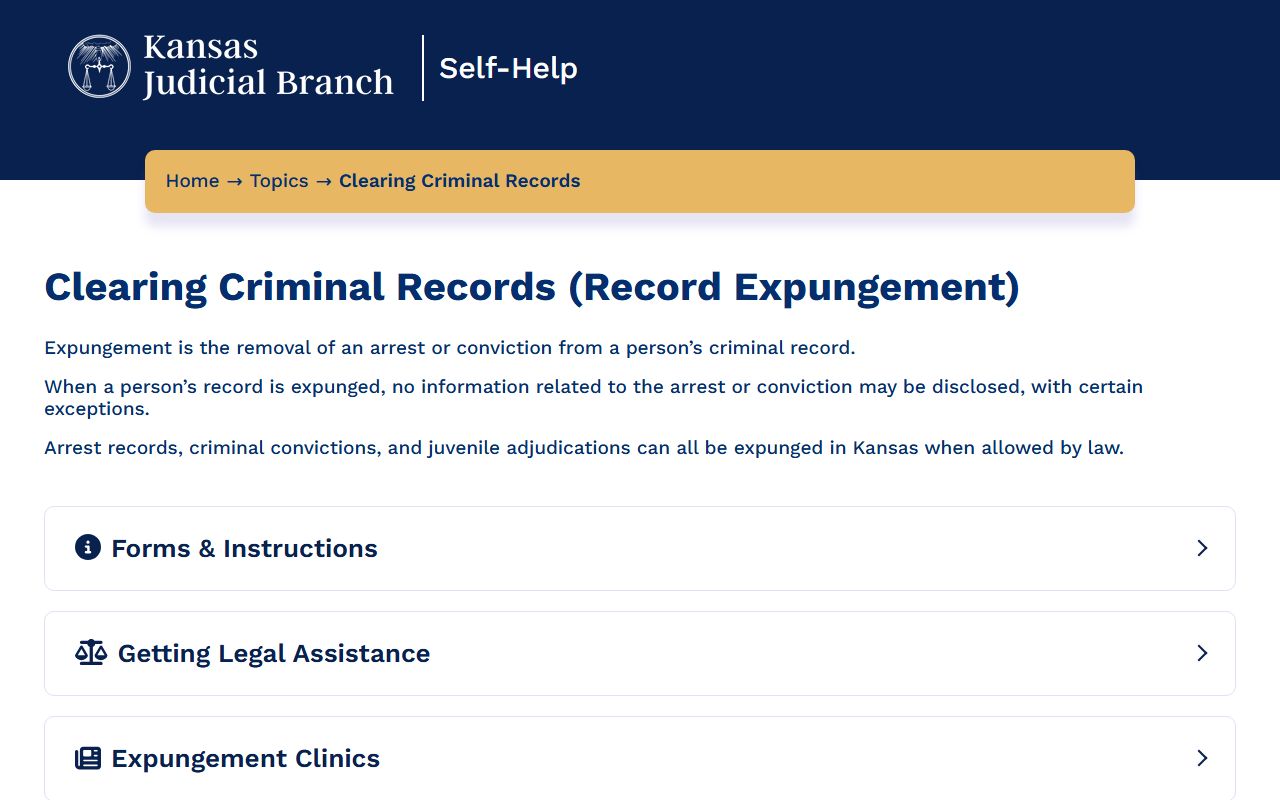
Expungement guidance matters because dismissed charges, arrests, diversions, and some convictions may be treated differently after a court grants relief.
Charges and Convictions Compared
A court charge is not proof of guilt. It is a formal accusation. A conviction is a court outcome based on a guilty plea, no-contest plea accepted by the court, or trial verdict. Arrest records and court charges can remain visible even when a case later ends in dismissal, acquittal, diversion, or amendment. For Scott County records, review the disposition and sentence fields instead of stopping at the first charge line.
| Point | Charge | Conviction |
|---|---|---|
| Record Stage | Filed after arrest, citation, or investigation. | Entered after plea, verdict, or accepted court finding. |
| Can Be Changed | Yes, by amendment, reduction, dismissal, or new filing. | Yes, but usually only through later court order, appeal, or expungement. |
| Best Field to Check | Complaint, charge list, citation, or docket entry. | Disposition, sentence, and journal entry. |
Statewide Charge Lookup Channels
Scott County records can connect to state systems, but each system has a different purpose. KBI criminal history is a fee-based statewide criminal history record check. KBI registered offender search is for sex, violent, and drug offender registry information under the Kansas offender-registration framework. KDOC KASPER is the Kansas Adult Supervised Population Electronic Repository for adult supervised population location and status.
KDOC KASPER appears in the manifest for the Scott County arrest records and court charges page.
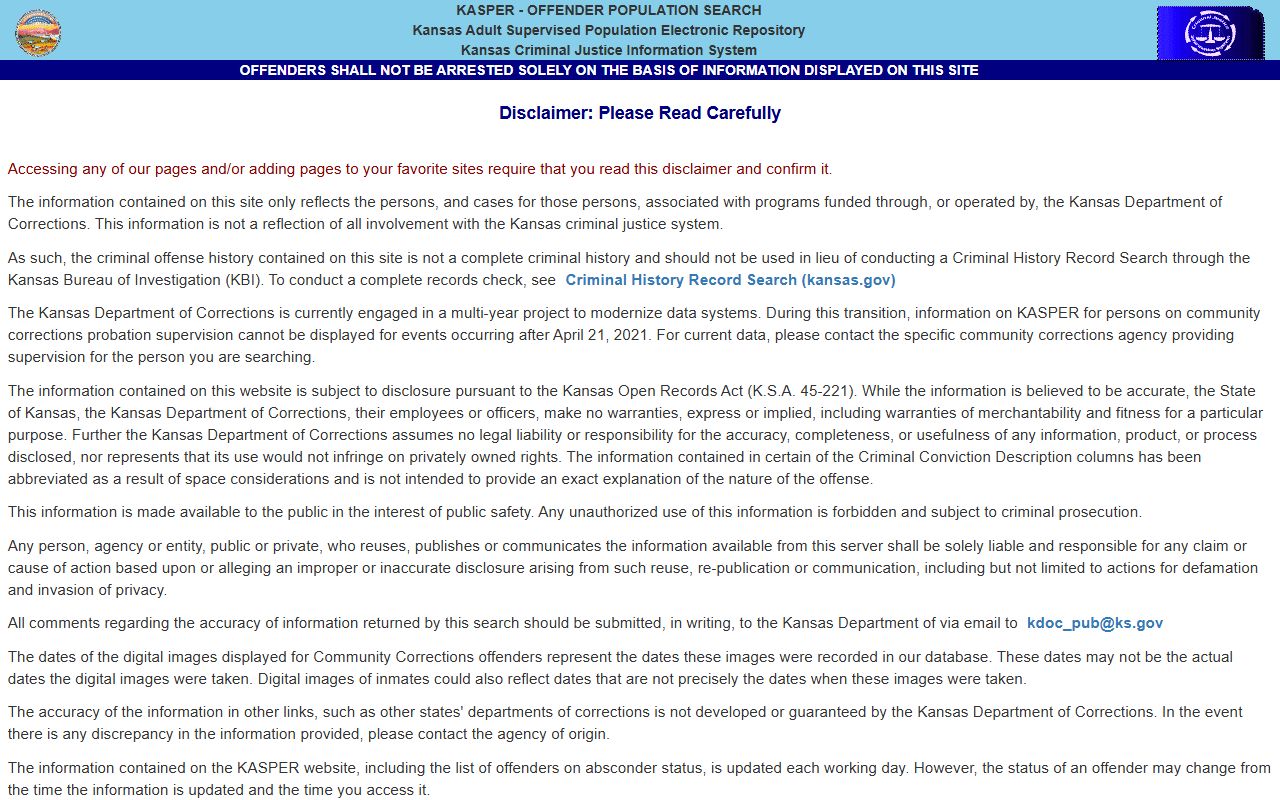
KASPER is useful after a person enters state supervision, but it is not the same as a Scott County jail roster or a district court charge list.
KDOC's locating a resident FAQ explains how state custody location and status information is handled.

The FAQ reinforces the difference between state supervision status and the local court record that lists charges and dispositions.
Access Limits for Scott Charges
Kansas Open Records Act rules apply to many local records, but they do not require every law enforcement or court detail to be disclosed. K.S.A. 45-218 provides the three-business-day response framework. K.S.A. 45-221 lists categories not required to be disclosed, including certain criminal investigation records. K.S.A. 45-230 restricts certain use of names and addresses obtained from public records.
The K.S.A. 45-221 exemption source is assigned to this arrest-records and charges page.
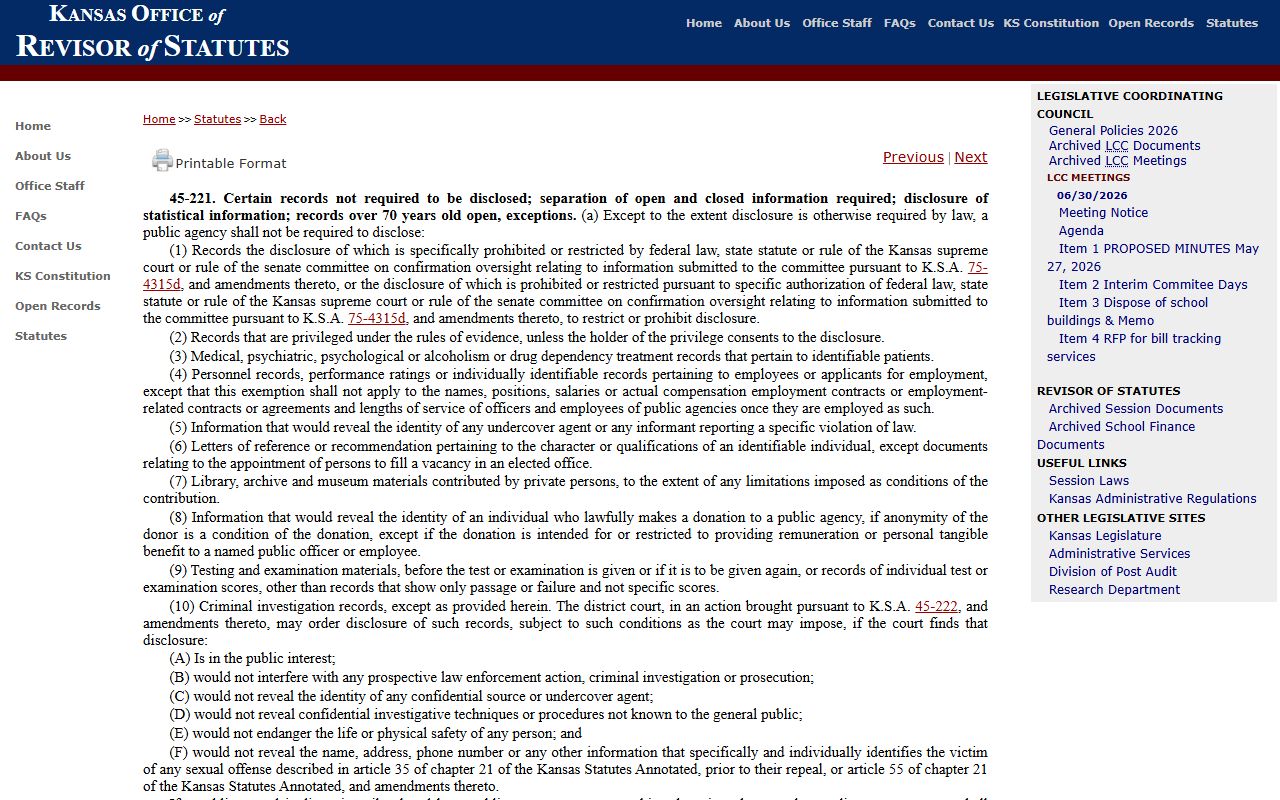
That exemption statute is the reason some investigation records, sealed records, juvenile data, and sensitive identifying details may not be released.
The K.S.A. 45-230 source is also assigned for this page.
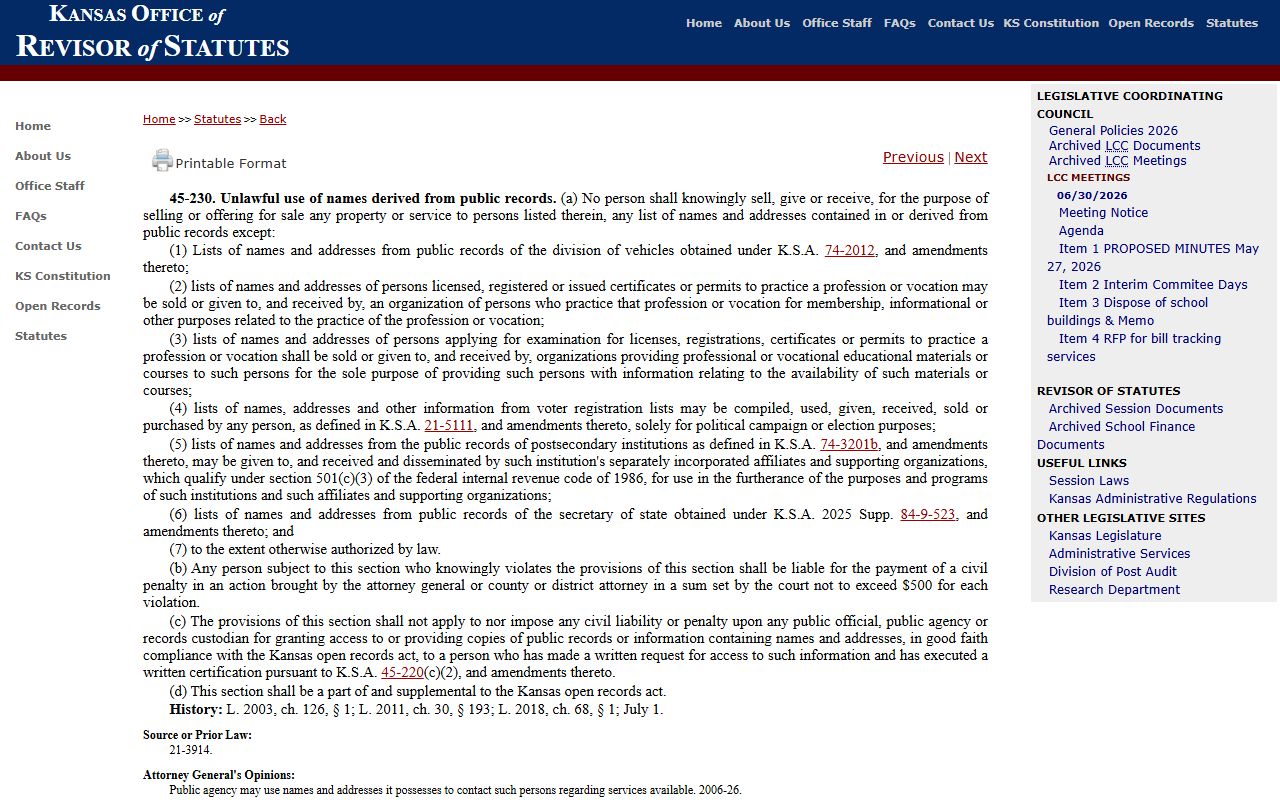
The commercial-use restriction is relevant when a requester obtains names or addresses from public records and plans to reuse them.
Sealed or Expunged Charges
Scott County charge records can be restricted by age, case type, statute, or court order. Juvenile matters and child-in-need-of-care records are not treated like adult criminal files. Sealed material is unavailable to the general public by statute or court order. Expungement is the Kansas process that removes qualifying arrests, convictions, diversions, juvenile adjudications, and some other records from ordinary public access when the law allows it.
| Point | Sealed | Expunged |
|---|---|---|
| Public Access | Blocked from public view while the seal applies. | Removed from ordinary public access after relief is granted. |
| Common Examples | Juvenile, protected-address, medical, investigation, or court-ordered material. | Qualifying arrest record, diversion, conviction, or juvenile adjudication. |
| Where to Ask | Clerk of the District Court for court access questions. | Kansas self-help expungement resources or an attorney. |
Important: Public arrest or charge data should not be used for FCRA-regulated screening unless a lawful consumer-reporting process is used.