
Scott County District Court Overview
Kansas district courts are constitutional trial courts with general original jurisdiction. In Scott County, the District Court handles felony and misdemeanor criminal matters, civil actions, domestic cases, probate estates, guardianships, conservatorships, juvenile matters, protection orders, small claims, and appeals from municipal court. Probate is not a separate courthouse in Scott County; it is a district court function.
Scott County belongs to the 25th Judicial District with Finney, Greeley, Hamilton, Kearny, and Wichita counties. The local records counter is still in Scott City. The county page lists Judge Edward Frock, Clerk of the District Court Sandra Acosta, and Deputy Clerk Deena Sharpe. The judicial district page identifies Magistrate Judge Shairlyn L. Wasinger, Sandra Acosta as clerk, and Deena Ballard as deputy clerk.
The Kansas district courts overview is the statewide source for district court jurisdiction.
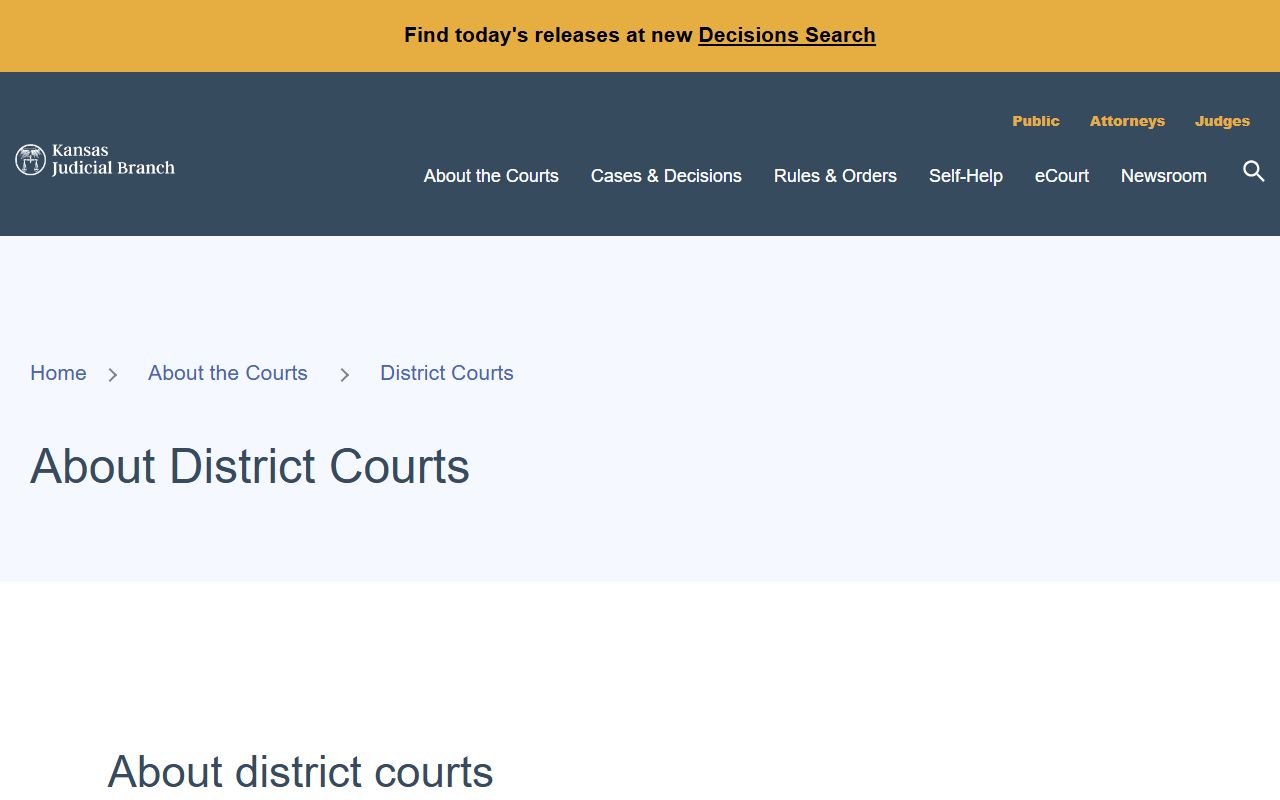
That statewide role explains why so many Scott County record types route through one trial court.
Scott County Court Offices
Scott County has one local district court location for the broad trial-court record set. Scott City Municipal Court is a lower city court and should be checked for municipal ordinance or city traffic matters. Related offices, such as the County Attorney and Court Services, can appear in court records but do not replace the clerk as the record custodian.
| Court / Office | Role | Address | Phone / Contact |
|---|---|---|---|
| Scott County District Court | Civil, criminal, probate, divorce, juvenile, protection, small claims, records terminal | 303 Court Street, 2nd Floor, Scott City, KS 67871 | (620) 260-2553; clerk (620) 260-2552; fax 620-872-3683 |
| Scott County Magistrate Judge | Local district magistrate judge | 303 Court Street, Scott City, KS 67871 | Hon. Shairlyn L. Wasinger; use court phone |
| Scott City Municipal Court | City ordinance and municipal traffic court | 303 Court St., courthouse basement, Scott City, KS 67871 | 620-872-5822; fax 620-872-2020 |
| Scott County Attorney | Prosecution and county counsel | 303 Court Street, Basement/Ground Level, Scott City, KS 67871 | 620-872-3600; fax 620-872-5666 |
| 25th Judicial District Court Services | Probation and court services district office | 607 W. Santa Fe, Garden City, KS 67846 | 620-271-6150 |
District Court vs Municipal Court
Kansas does not use a separate county court or justice court for Scott County trial-court records. The main local split is between the District Court and Scott City Municipal Court. That split affects where to search, which clerk to call, and whether a matter appears in Kansas CaseSearch.
| District Court | Municipal Court | Appeals | |
|---|---|---|---|
| Main role | General trial court for Scott County | City ordinance and municipal traffic court | Municipal convictions can be appealed to district court |
| Criminal matters | Felony, misdemeanor, warrants, bond, pleas, sentencing, probation | City ordinance prosecutions and local traffic matters | District court docket may show appeal activity |
| Family / Probate | Divorce, parentage, protection, probate, guardianship, conservatorship | No probate or divorce jurisdiction identified | State appeals generally go to Kansas Court of Appeals |
| Search source | Kansas CaseSearch, courthouse terminal, District Court Clerk | Municipal court clerk and city payment link | CaseSearch and appellate court records if appealed |
Scott County Case Flow
A case begins in the court with authority over the subject. Felony complaints, divorce petitions, probate estates, guardianships, juvenile matters, protection orders, and most civil actions belong in district court. City ordinance prosecutions and many city traffic citations begin in municipal court. Appeals from the Scott County District Court generally move to the Kansas Court of Appeals, with Kansas Supreme Court review available in direct or discretionary categories.
Criminal flow: Arrest or complaint › first appearance › arraignment › pretrial motions › plea or trial › disposition › sentencing › appeal.
Civil flow: Petition filed › service › answer › motions or discovery › hearing or trial › judgment › collection or appeal.
Civil Family Criminal Probate
Scott County District Court records are organized by case type rather than by separate courthouses. Civil records can include petitions, summonses, motions, orders, judgments, garnishments, executions, foreclosures, and satisfaction documents. Criminal files can include complaints, bond orders, arraignment events, plea documents, trial records, sentencing journal entries, probation conditions, and revocation filings. Family records include divorce, parentage, support, parenting time, and protection matters.
Probate files may include wills, petitions, letters testamentary or administration, inventories, creditor claims, notices, orders, accountings, final settlements, guardianship reports, conservator inventories, and small-estate affidavits. Juvenile, adoption, treatment, and protected-address material may be restricted even when the case category is known.
Twenty Fifth Judicial District
The 25th Judicial District provides the regional framework for Scott County. Its official navigation includes Finney, Greeley, Hamilton, Kearny, Scott, Wichita, and Probation. Chief Judge Kristi Cott is identified in district materials, while Scott County's local district court page points readers to Scott City for the court counter, clerk, and judge information.
The Kansas Open Records Act chapter index is one statewide source for court and government records access rules that affect district court requests.
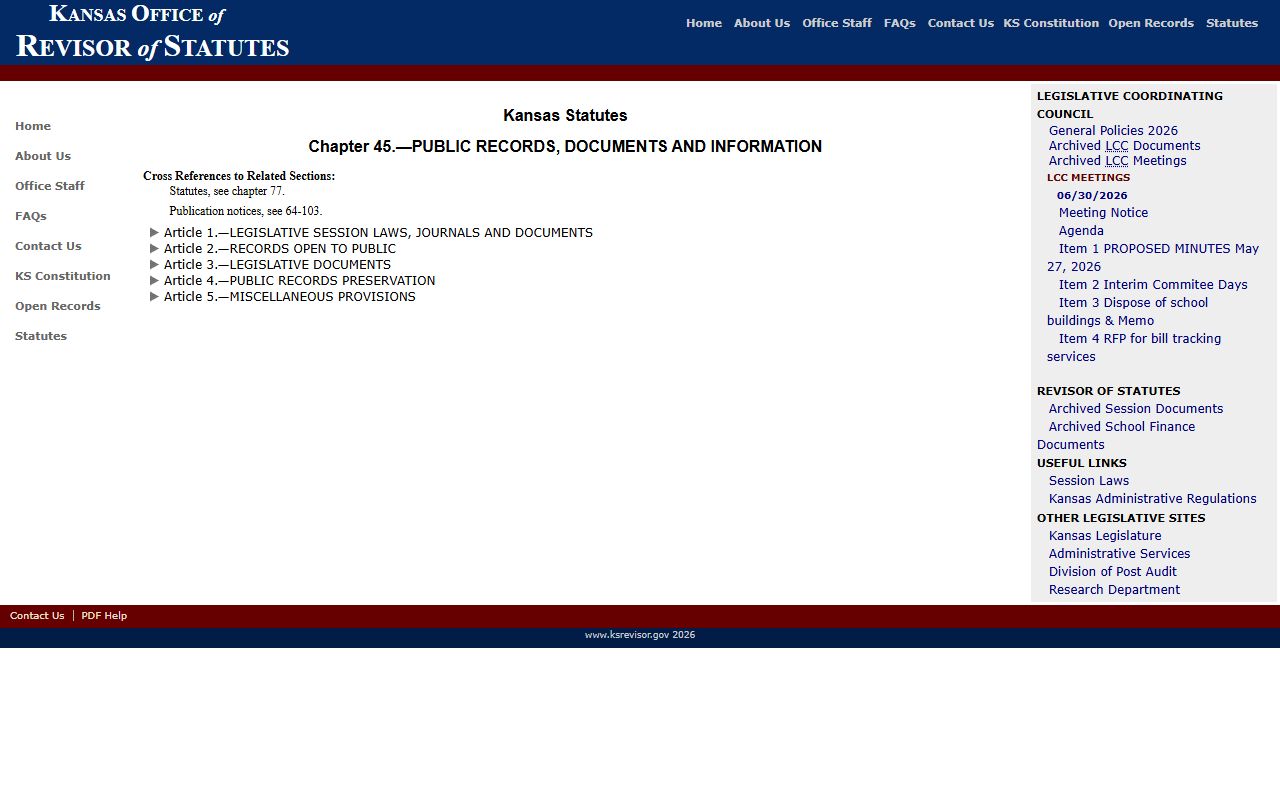
KORA provides the access framework, but court confidentiality rules still control sealed and restricted case records.
Records Terminals and KORA
Scott County District Court records can be searched online, at courthouse public access computers, or through a direct clerk request. The local policy says public computers are in the clerk's office and users must sign in. It also says information requests may be made by telephone, in person, in writing, or by fax, and that the office has three business days to respond. Copy fees are listed as $0.25, with $1 for additional certified copies of a document.
K.S.A. 45-216 states the public-record policy. K.S.A. 45-218 covers inspection and the three-business-day response period. K.S.A. 45-219 allows reasonable copy and staff-time fees. These statutes do not override sealed, juvenile, adoption, mental health, or other protected court records.
K.S.A. 45-216 is the source for Kansas public-record policy.
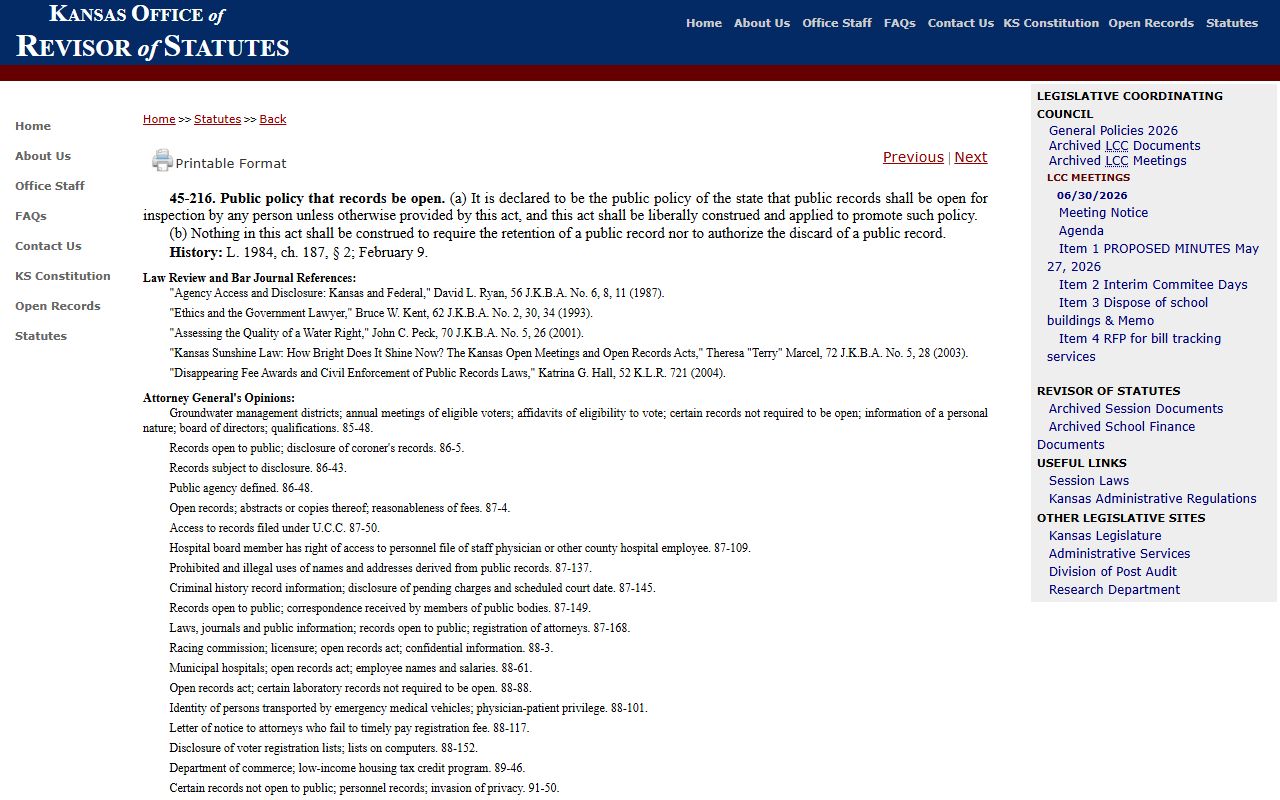
The policy supports access, while specific exemptions and court orders set the limits.
K.S.A. 45-218 is the source for inspection timing and request response rules.
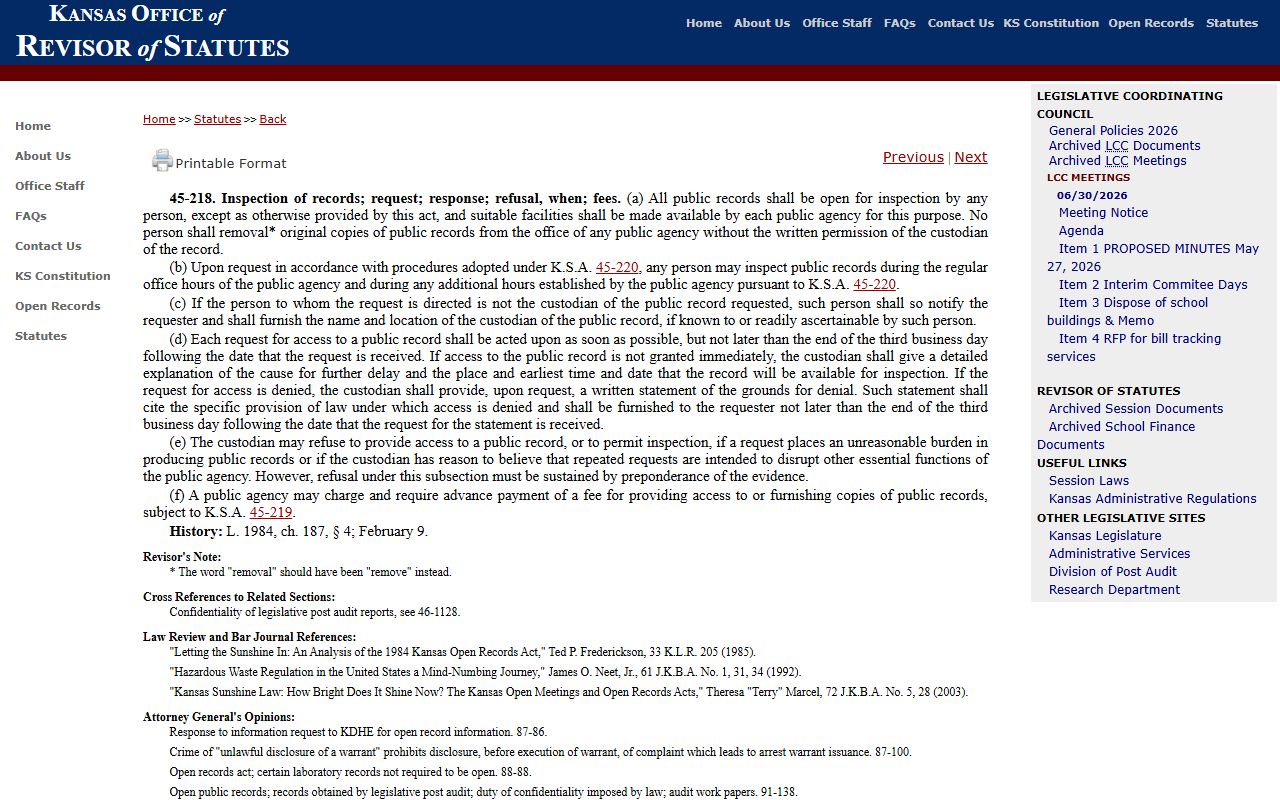
That three-business-day framework matches the local clerk policy for Scott County information requests.
K.S.A. 45-219 is the source for reasonable records fees.
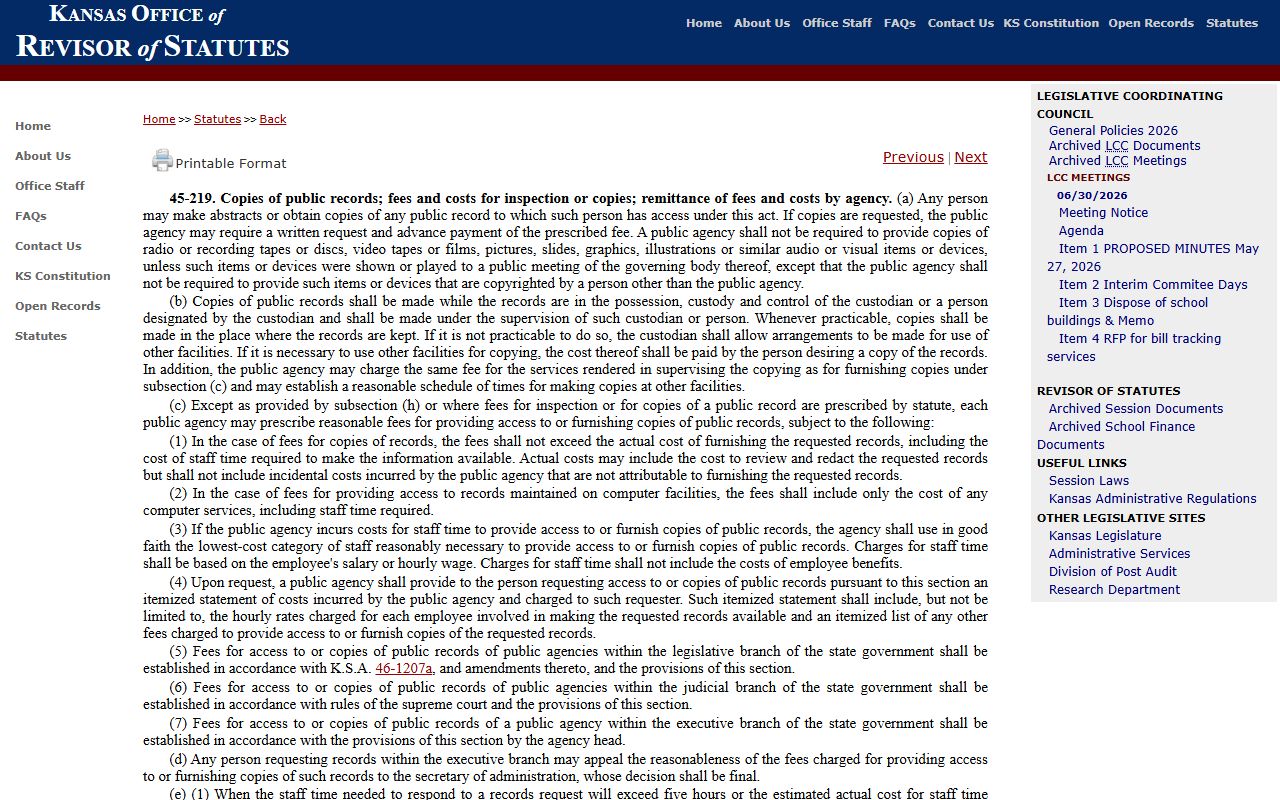
Fee rules matter because a certified copy or staff-assisted search may cost more than a free online docket check.
Visiting Scott County Court
The courthouse address is 303 Court Street, Scott City, Kansas 67871. District Court is on the second floor. Posted district court hours are Monday through Friday, 8 a.m. to noon and 1 p.m. to 5 p.m. Jury instructions direct general entry through the east doors and ADA entry through the south entrance. Jurors report to the second floor and check in with the clerk.
Do not bring cell phones into the courtroom. The court also directs visitors to leave firearms, weapons, pepper spray, mace, and similar chemical sprays in the vehicle. Scott City Municipal Court is in the courthouse basement, so visitors should confirm whether they need the municipal court clerk or the district court clerk before arriving.